What is Blockchain?: The Technology of Cryptocurrency
You are likely to have heard of Bitcoin and other cryptocurrencies, but not much about the technology that powers them. That technology is referred to as blockchain and is one of the most intriguing and possibly disruptive concepts in contemporary computing.
How a Blockchain Works
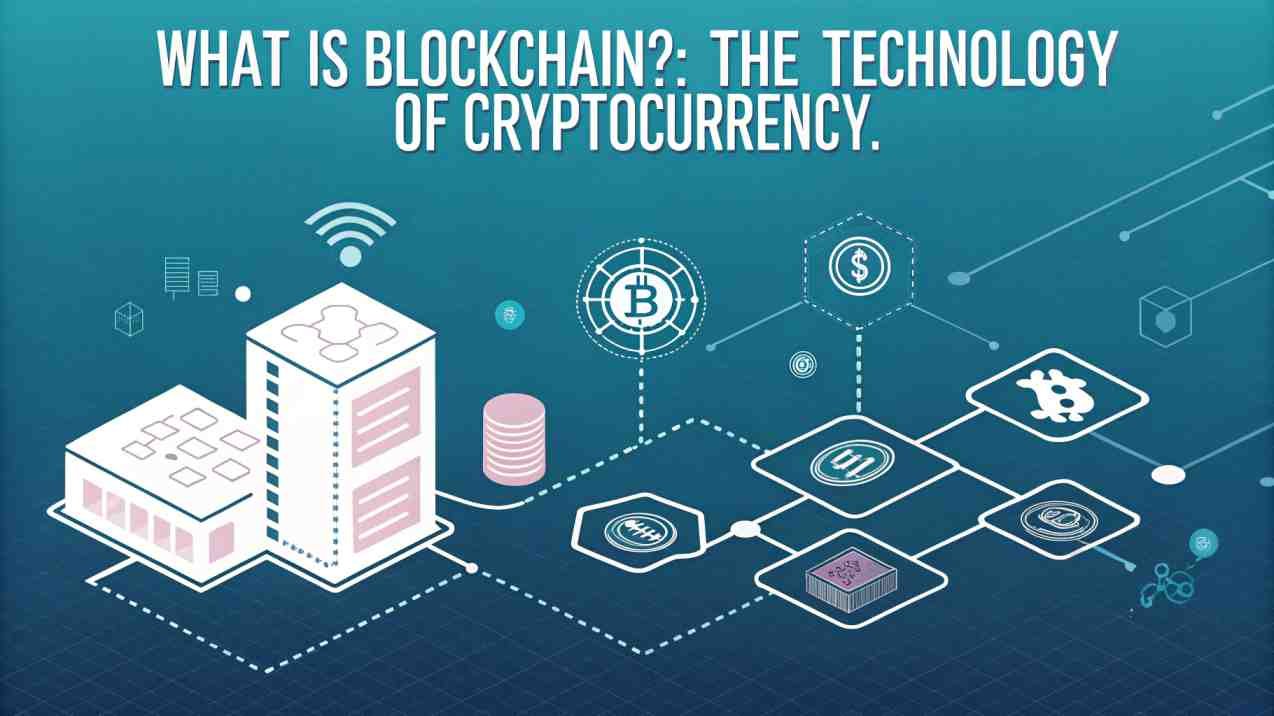
A blockchain is a digital ledger, or rather a register, that stores information in blocks linked in a chain. The point of uniqueness is that it is not a ledger that is maintained in one place by a single company or government. Rather, it is replicated across thousands of computers worldwide. Each copy of the ledger is updated in real time as new data is added. That makes it very hard to change or modify, since all copies must be updated at the same time.
The first significant use of blockchain technology was developed in 2009 with the cryptocurrency Bitcoin. Bitcoin uses a blockchain, rather than a bank, to store a record of financial transactions. Once you transfer Bitcoin to a person, the transaction is recorded in a block and added to the chain. A system of computers known as miners authenticates the transaction by solving complex mathematical problems. The transaction cannot ever be undone after it has been verified.
Beyond Cryptocurrency Blockchain.
There are numerous other applications of blockchain beyond cryptocurrency. Medical professionals are investigating blockchain as a means of securely storing and sharing patient records. Blockchain could be used to design tamper-resistant digital ballots for voting systems. Food, medicine, and electronic supply chains could use blockchain to trace products back to their source, ensuring they reach consumers, curbing fraud, and enhancing safety.
The food industry is a real-life example. Large grocery stores have tested the blockchain to trace farm-to-store-shelf produce. In the event of a food safety outbreak caused by a batch of lettuce, blockchain will enable tracking the exact source of the contaminated product much faster, which can save lives.
The Future of Energy Concerns and Future
The opponents of blockchain note that it consumes massive levels of energy, especially in the mining of cryptocurrencies. Other new blockchain systems are attempting to solve this using less energy-consuming strategies.
Blockchain is a young technology, and its potential to enable transparent, safe, and decentralized record-keeping can transform many industries in the coming years.