
What is the difference between Virtual Reality and Augmented Reality?
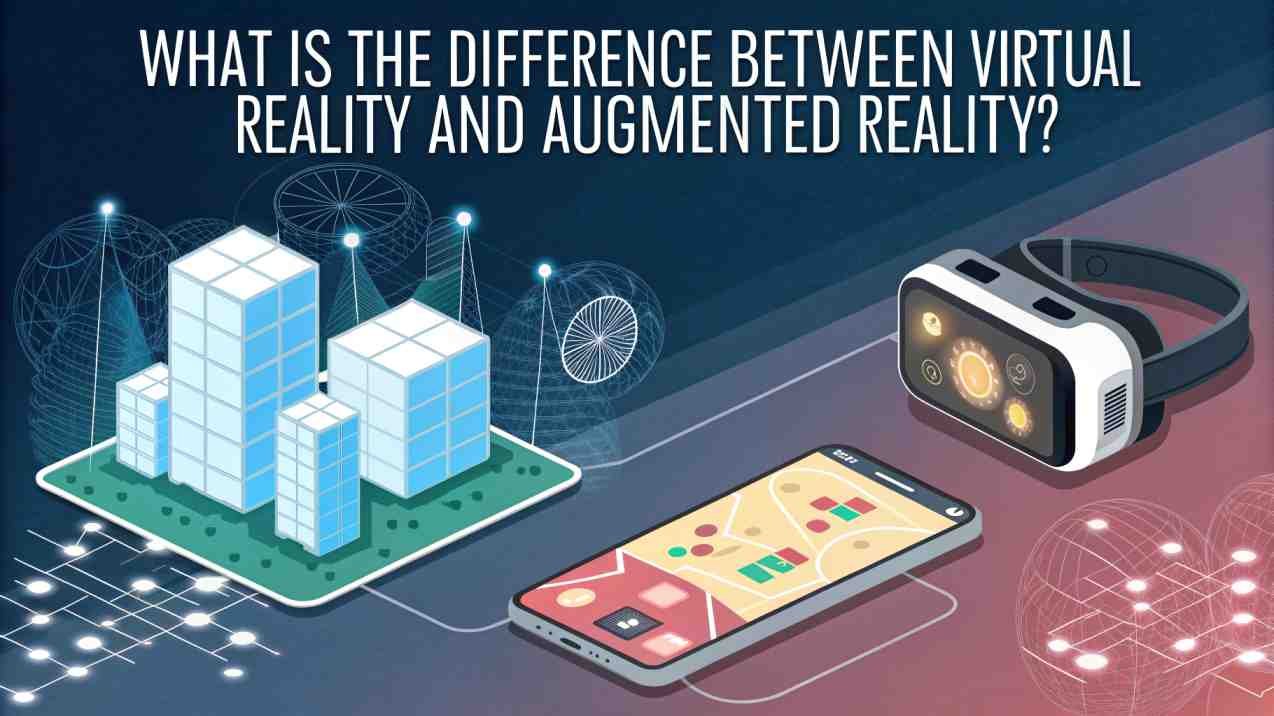
Virtual and augmented reality are modern technologies that are similar yet very different. They both use digital technology to alter how you perceive the world, but with a difference: one replaces the world, and the other adds to it.
Virtual Reality: Stepping Inside.
VR is a fully digital world that substitutes the real world in terms of what you hear or see. In order to feel the VR, it is usual to put on a headset covering your eyes and ears and not letting any physical world come between you. The headset features a 3D digital environment that responds to your head movements. You can be sitting in your living room, yet you are imagining yourself visiting an old city, swimming in water, or flying in the clouds.
VR devices such as the Meta Quest 3 and PlayStation VR2 have gained popularity as gaming devices. However, there are serious applications of VR as well. VR simulation is used in medical schools to teach students about surgery. It is practiced by military and law enforcement to train for dangerous situations in a safe way. VR is used to address phobias and post-traumatic stress disorder by exposing patients to regulated virtual settings in order to cure these ailments.
Superimposition of the Real World: Augmented Reality.
Augmented reality, or AR, operates differently. It does not replace the real world; rather, it superimposes digital images, text, or objects over what you already see in front of you. AR can be experienced on a smartphone camera or on special AR glasses. The first popular AR application was the video game Pokémon Go, which overlaid virtual creatures onto the real world as seen through your phone camera.
Experiments by Apple’s Vision Pro and Google’s earlier Glassess demonstrated the potential to integrate the digital and real worlds through AR glasses. Think about walking down a street and reviewing restaurants floating over the storefronts or just looking at a piece of furniture in a store, and then see how it would look in your home.
What Comes Next for XR?
VR and AR are both immature technologies. The difficulties include the ability to make headsets lighter and more comfortable, to increase battery life, and to develop more content. Nevertheless, possibilities of education, entertainment, healthcare, and business are enormous.
The two are used together and commonly referred to as extended reality, or XR, a broad term used to describe the technologies that help merge the online and real world in novel ways.