GPS: The way it works and how it changed the world.
The Global Positioning System, also known as GPS, is a technology that has become such an inseparable part of contemporary life that people no longer pay much attention to it. Whenever you open a map application to find your place, and whenever a delivery driver knows where to find your house, or a plane lands without injuries, GPS plays a big role. However, just what is the mechanism of this wonderful machine?
Satellites, Signals, Trilateration.
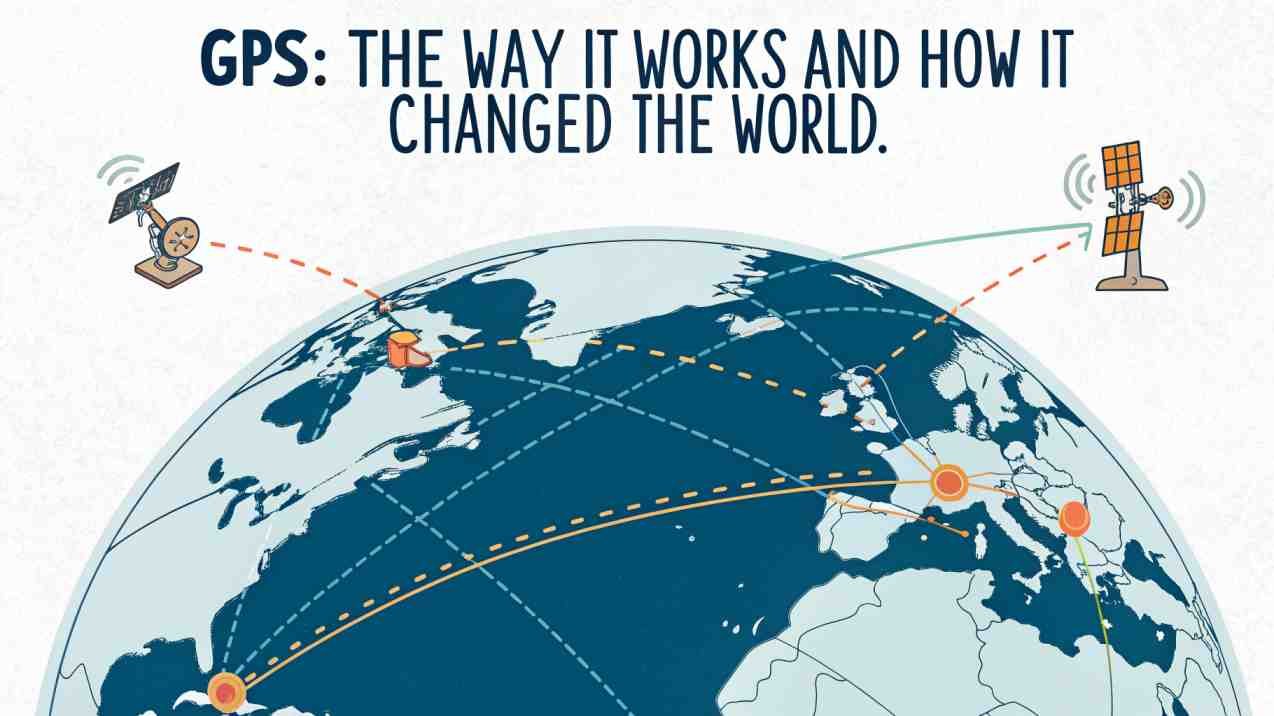
GPS is run and owned by the United States government, and it depends on a system of at least 24 satellites, which are in orbit around Earth at approximately 12,500 miles (A) above the surface. These satellites continuously transmit signals with their exact positions and accurate times. A GPS receiver in your phone or car listens to signals of several satellites simultaneously.
The GPS is a beautiful thing mathematically. The speed of a signal in each satellite is that of light. The GPS receiver determines the duration taken by each signal. As it has the signal’s speed, it can determine the distance to each satellite. This means that the receiver will be able to locate your position on Earth with a matter of meters by having at least 4 satellites send signals and comparing the distances. This is referred to as trilateration.
Form Military Instrument to Technology of Everyday Life.
GPS was first invented in the 1970s by the United States military and was initially used only for defense applications. Civilian use was opened in the 1980s, and it was fully operational by the mid-1990s. When smartphones arrived, GPS transformed the daily lives of billions of people in an amazing way.
GPS Beyond Navigation
The most apparent application is navigation, although GPS is much more than direction finding. GPS helps farmers to control planting and harvesting machines with incredible precision. It is used by scientists to trace the motion of tectonic plates and to determine rising sea levels. Pilots use GPS for landing and navigation. GPS is used by emergency responders to locate people in distress quickly.
GPS is also needed in financial systems. GPS timestamps used by banks and stock exchanges indicate when transactions were made, helping prevent fraud and keep global markets aligned.
GPS is so accessible due to smartphones that it has become a given. However, the system itself is an incredible success in engineering, mathematics, and international collaboration.