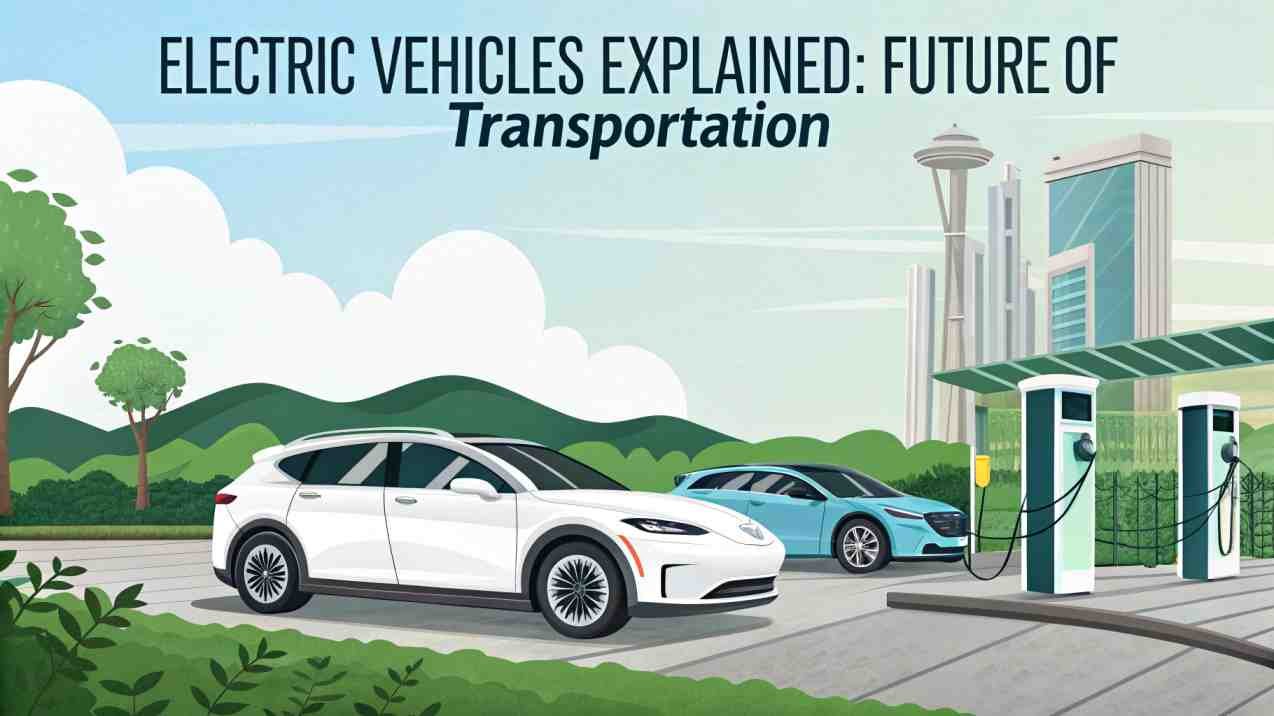
Electric vehicles, or EVs, are those cars and trucks that use electricity rather than gasoline. They operate electric motors by rechargeable battery packs that propel the wheels. EVs are among the trendiest trends in the technology and transportation sectors, amid concerns about climate change and rising fuel costs.
The development of roads in the USA dates back to early ideas.
The concept of electric cars is not new. There were earlier models in the late 1800s, which were replaced by gasoline-powered vehicles. What is new is the quality of the EVs’ batteries and the technology that makes electric cars viable for everyday use. Companies such as Tesla, Chevrolet, Ford, and Rivian are currently manufacturing electric cars driven by millions of individuals.
Environmental and Cost Benefits.
The ability of EVs to emit zero direct emissions during driving is one of their greatest benefits. Conventional vehicles also consume gasoline and emit carbon dioxide, a greenhouse gas that contributes to climate change. Drivers can reduce their carbon footprint by switching to electric vehicles. When the energy used to charge the battery is renewable (solar or wind), the positive environmental impact is even greater.
In most instances, the electric cars are also less expensive to operate than gasoline cars. Electric power is generally cheaper per mile than gasoline, and EVs have fewer moving components, so they require less maintenance. Oil changes are unnecessary, exhaust systems do not need repair, and regenerative braking also extends brake life.
Distance, Electricity, and the Future.
People are always worried about EVs because they fear their batteries will deplete before they reach a charging station, which creates range anxiety. The first electric cars could travel 80 miles on a single charge. Today’s EVs are much better. The long distance is also very manageable, with many being able to travel 250 to 400 miles on a single charge. Public charging stations are also increasing rapidly across the United States.
An EV remains more expensive than a similar gasoline-powered vehicle, but federal tax credits and state incentives can bridge the gap. Analysts project that EV costs will continue to decline as battery technology advances and manufacturing scale increases.
Electric cars cannot be considered the ultimate solution to all transportation issues, but they are a significant step toward a cleaner, more sustainable future.