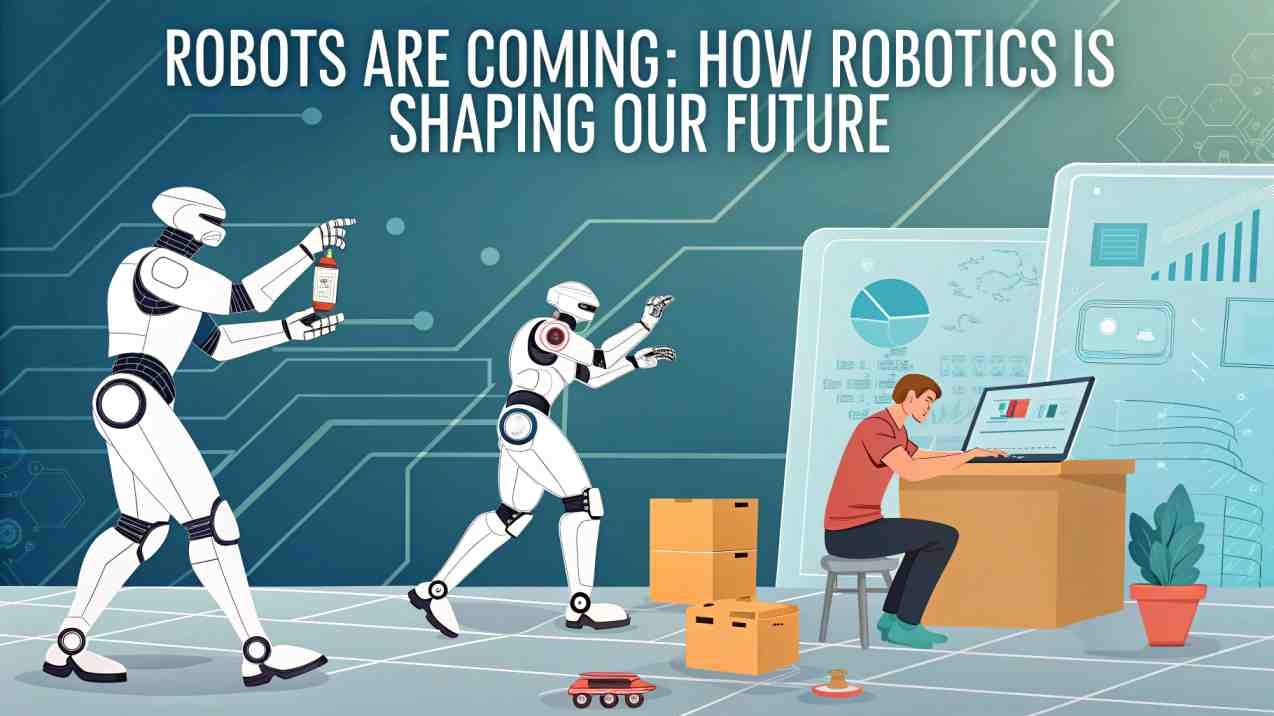
When you mention the word robot, you may imagine a humanoid machine as the one you have seen in a movie. However, in the real world, robots can be of all sizes and shapes and are already at work assembling cars all the way to performing surgery. One of the most rapidly expanding aspects of technology is robotics, which is transforming almost all industries in which it finds itself in.
What Makes a Robot?
A robot is a device that can perform an automatic task, often using a combination of sensors, software, and mechanical components. There are robots that follow preset instructions. The others use artificial intelligence to adapt to circumstances and make independent decisions.
Robots in Medicine and Factories.
Industrial robots have been in operation in factories for decades. They are capable of welding automotive components, painting surfaces, and moving heavy materials with such accuracy, speed, and repeatability. They assist manufacturers in making products more quickly and with greater reliability because they do not get bored or commit human errors. In the current world, organizations such as Tesla operate some of the most automated factories, where machines handle most of the production.
The domain of medical robotics is among the most promising areas for development. Surgical robots, like the da Vinci Surgical System, enable surgeons to perform minimally invasive surgery through small openings. The computer-controlled robot interprets the surgeon’s hand movements into high-precision, small-scale movements. This leads to reduced patient pain, reduced hospitalization, and a quicker recovery.
Delivery Drones and the Jobs Question.
Robots that deliver products are increasingly seen on the streets and in warehouses. Firms such as Amazon use robotic systems in their fulfillment centres to sort and transport packages quickly. Other food delivery firms are also experimenting with small wheeled robots that can deliver orders to individuals.
Photography, package delivery, search and rescue, and agricultural surveillance are just a few of the uses of flying robots, also known as drones. The military also uses unmanned aerial vehicles for patrols and other operations.
There is concern that some people will lose their jobs as robots become smarter and more functional. The fact is that automation has already replaced some monotonous jobs. Nonetheless, robotics opens up engineering, programming, and maintenance positions as well. The trick is to equip the modern workforce with the skills to cope with the robots of the future.