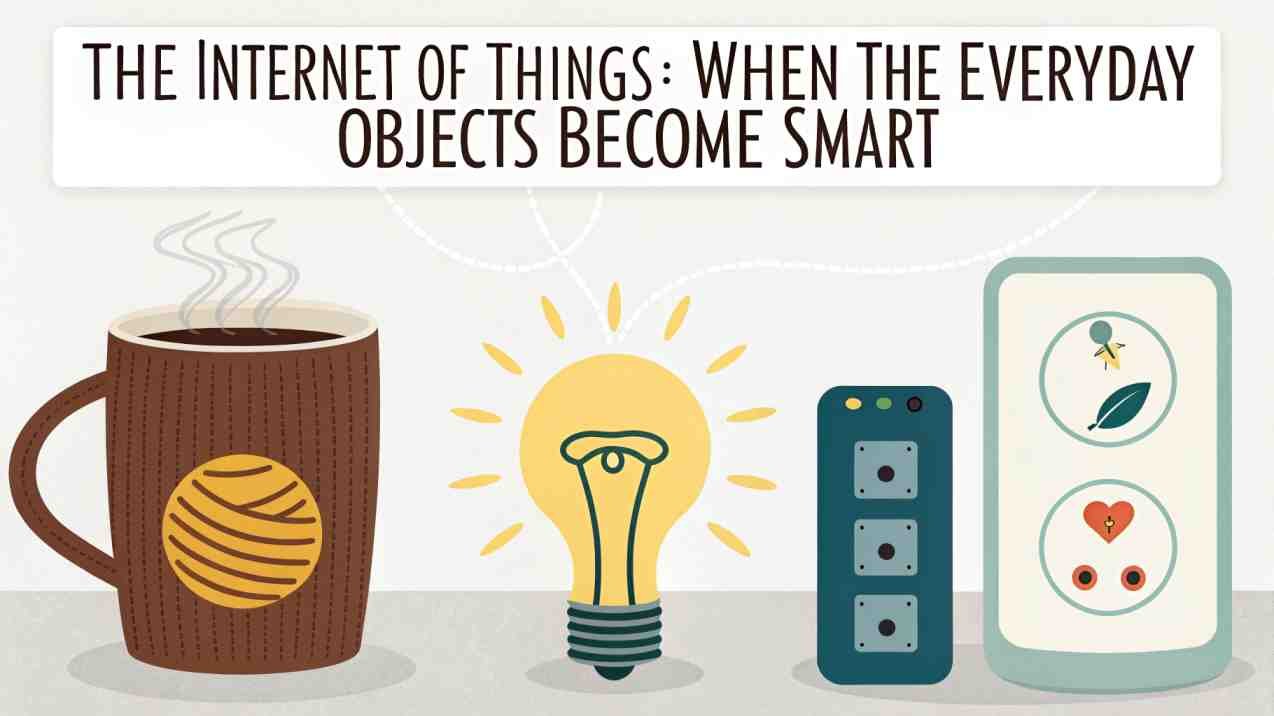
To wake up in the morning and find your coffee maker brewing because of your alarm clock. Before you get out of bed, your thermostat temperature changes. Your refrigerator reminds you that you are low on. This is not science fiction. It is known as the Internet of Things, and it is already occurring in the homes and cities worldwide.
Internet of Things: What is it?
The Internet of Things, more commonly known as IoT, is a system of physical entities connected to the internet that can gather and transmit data. These items may range from simple smartwatches and home appliances to industrial machines and urban streetlights. The point is that these objects can communicate with one another and with users, and simplify daily routines, making them more automatic and efficient.
Smart Homes and Smart Cities
Most people identify smart home devices as the most visible manifestation of the Internet of Things. Smart speakers, smart thermostats, smart doorbells, and smart light bulbs mean residents can control their homes’ state using an app on their phone or by talking to a voice assistant. An intelligent thermostat, say, can learn your daily habits and automatically regulate heating and cooling systems to conserve energy.
Cities are also becoming smarter with the IoT. Traffic lights can modify their timing based on real-time traffic data to minimize traffic congestion. Trash cans are equipped with sensors that alert sanitation workers when the bins are full, ensuring more efficient garbage collection. The water meters will be smart enough to identify leaks at an early stage, thus saving water and avoiding damage.
IoT in Industry and Security Issues.
In the farming industry, the IoT sensors can be used to observe soil moisture, temperature, and the health of crops. This data will help farmers water crops at the right time, enabling them to use less water and increase production. Factories can also have connected machines that alert maintenance teams before a machine breaks down, thus saving factories a lot of money in downtime.
IoT has concerns about security and privacy. Connected devices generate more vulnerabilities to hackers. An unsecured smart thermostat or a baby monitor can be used to gain access to your home network. Selecting devices from reputable companies and continually updating the software will mitigate these risks.
The Internet of Things is filling the gap between the physical and virtual worlds that was difficult to envision only a decade ago, and it is only beginning.